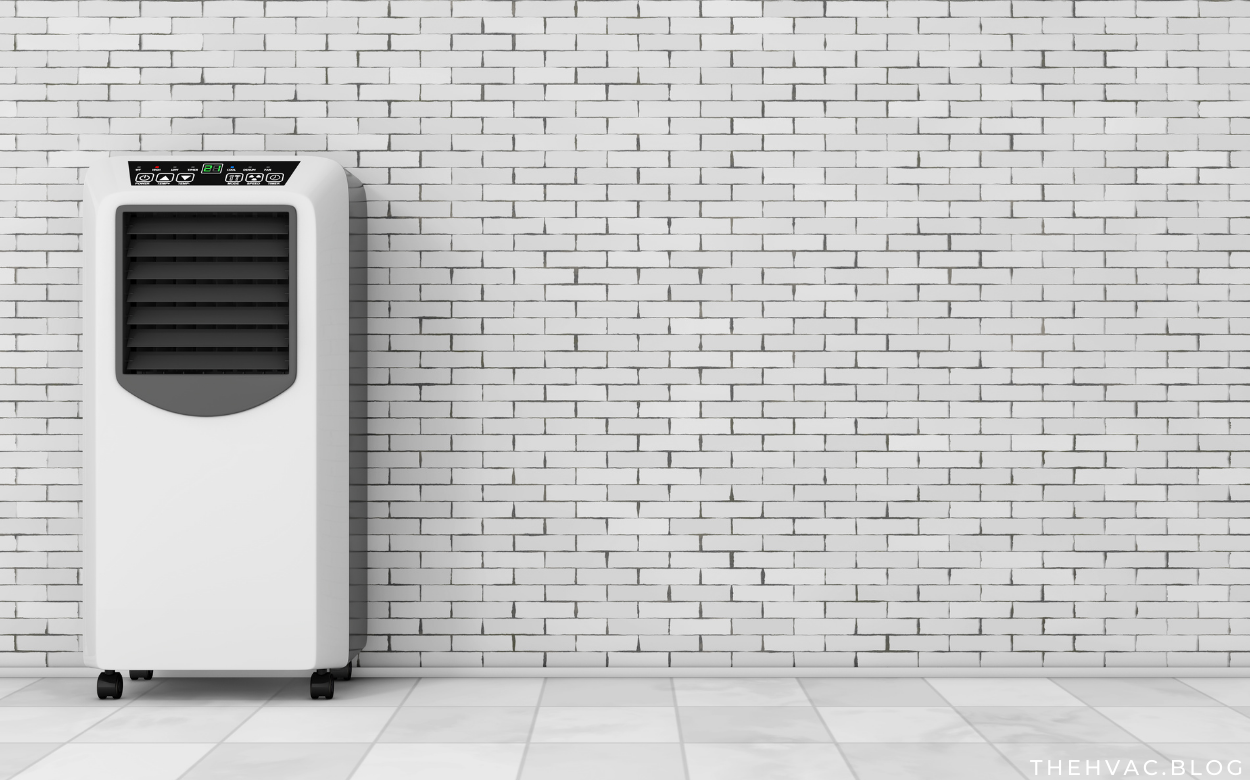
If you’ve been searching for a cooling solution that doesn’t require window access or permanent installation, you’ve probably come across the term ventless air conditioner. It sounds almost too good to be true — a unit that cools your space without any ducting, venting, or major setup. But what exactly is a ventless AC, how does it work, and what are its real limitations? This guide breaks it all down so you can make an informed decision before spending a dime.
Before diving in, if you’re already close to a buying decision, check out this curated list of the best ventless portable air conditioners for top-rated options worth considering.
Key Takeaways
- A ventless air conditioner uses evaporative cooling, not refrigerant-based compression, to lower air temperature
- These units work best in hot, dry climates — they lose effectiveness in humid environments
- They are not true air conditioners in the traditional sense; they are more accurately called evaporative coolers or swamp coolers
- Ventless ACs are energy-efficient, portable, and easy to set up with no installation required
- They work by passing warm air over water-saturated pads, releasing cooled, moistened air into the room
- They are not a replacement for a compressor-based AC in most climates, but they are a legitimate cooling tool in the right conditions
- Regular maintenance — primarily refilling the water tank and cleaning the pads — is essential for performance
What Is a Ventless Air Conditioner?
The term “ventless air conditioner” is a bit of a marketing label. These units don’t use the refrigeration cycle that traditional air conditioners rely on. Instead, they use evaporative cooling — the same principle that makes you feel cold when you step out of a swimming pool on a breezy day.
Water evaporates, and as it does, it absorbs heat from the surrounding air. A ventless unit pulls warm room air through water-soaked cooling pads, which drops the air temperature before a fan pushes it back into the space. The result is cooler, slightly more humid air — no compressor, no refrigerant, and no exhaust hose needed.
This is fundamentally different from a portable air conditioner that needs to be vented into an attic or out a window to expel hot air. Ventless units produce no hot exhaust, which is why they don’t require any venting at all.
How Does Evaporative Cooling Actually Work?
Here’s a simple breakdown of the process inside a ventless air conditioner:
- Warm air is drawn in through the back or sides of the unit using a fan
- The air passes through water-saturated cooling pads — these are typically made from cellulose or synthetic fiber
- Water evaporates from the pads, absorbing heat energy from the air in the process
- Cooled, humidified air is pushed out into the room through the front vents
- The water tank depletes over time and needs to be refilled periodically
The cooling effect can drop air temperature by anywhere from 5°F to 15°F, depending on the ambient humidity and the unit’s design. In very dry conditions, the drop can be even more significant.
Ventless vs. Traditional Air Conditioner: Key Differences
Understanding the distinction between these two technologies helps set realistic expectations.
| Feature | Ventless (Evaporative) AC | Traditional (Compressor-Based) AC |
|---|---|---|
| Cooling method | Evaporation | Refrigerant compression cycle |
| Venting required | No | Yes (window, wall, or duct) |
| Humidity output | Increases humidity | Decreases humidity |
| Energy consumption | Low (100–200W typical) | High (900W–1500W+ typical) |
| Best climate | Hot and dry | Any climate |
| Cooling power | Moderate | Strong |
| Installation | None required | Moderate to complex |
| Water required | Yes | No |
As you can see, the two technologies serve different needs. A traditional window unit or split system will outperform a ventless cooler in most climates, but the ventless option wins on simplicity, portability, and running costs.
When a Ventless Air Conditioner Makes Sense
Ventless coolers are genuinely useful in the right context. Here’s when they’re worth considering:
- Dry, arid climates — places like the American Southwest, parts of Australia, or the Middle East where relative humidity stays below 50%
- Spot cooling — targeting one person at a desk or workstation rather than cooling an entire room
- Rooms without windows — server rooms, interior offices, or basement spaces where venting isn’t possible
- Renters — no installation means no landlord approval needed
- Supplemental cooling — reducing the load on a central system during peak heat hours
- Outdoor spaces — patios, garages, and workshops where open-air conditions allow moisture to dissipate
If you’re trying to figure out which air conditioner is good for a small room, a ventless evaporative cooler can be a strong contender, especially in drier regions.
The Humidity Problem: Why Climate Matters So Much
This is the most important limitation to understand. Evaporative cooling adds moisture to the air. In a dry climate, that added humidity is actually comfortable — it counteracts the dryness while cooling the space. But in a humid climate, adding more moisture makes the air feel heavier, stickier, and more uncomfortable.
Relative humidity above 60–65% significantly reduces the effectiveness of a ventless cooler. At 80% humidity, you’ll barely notice a cooling effect at all, and the added moisture will make conditions worse.
This is why ventless ACs are popular in desert regions but are rarely recommended for the southeastern United States, coastal areas, or tropical climates.
Ventless Air Conditioner Performance at a Glance
| Relative Humidity | Cooling Effectiveness | Comfort Level |
|---|---|---|
| Below 30% | Excellent | Very comfortable |
| 30–50% | Good | Comfortable |
| 50–65% | Moderate | Acceptable |
| 65–80% | Poor | Uncomfortable |
| Above 80% | Negligible | Counterproductive |
Maintenance Requirements
One of the advantages of ventless coolers is that they’re relatively simple to maintain compared to refrigerant-based systems. However, they do require consistent upkeep to perform well and stay hygienic.
Regular maintenance tasks include:
- Refilling the water tank — depending on the unit size and fan speed, this may be needed every 4–8 hours
- Cleaning the cooling pads — pads should be rinsed and dried regularly to prevent mold, mildew, and mineral buildup
- Replacing cooling pads — typically every 1–3 seasons depending on water quality and usage frequency
- Cleaning the water tank — stagnant water can harbor bacteria, so the tank should be emptied and wiped down if the unit isn’t used for several days
- Checking the fan and filter — dust accumulation on the intake filter reduces airflow and efficiency
If you’ve ever dealt with musty smells from an air conditioner, you’ll understand why keeping those cooling pads clean is non-negotiable. Neglected pads in a ventless unit can develop the same mold and odor issues.
Energy Efficiency and Running Costs
One of the strongest arguments for ventless air conditioners is their energy consumption. Most models draw between 50 and 200 watts, compared to a window unit that typically uses 500 to 1,500 watts and a central system that can use significantly more.
If you want to calculate how much electricity a heater or cooling unit consumes, the math is straightforward: multiply wattage by hours of use and divide by 1,000 to get kilowatt-hours. At 150W running for 8 hours, that’s just 1.2 kWh — a fraction of what a compressor-based unit would consume.
This makes ventless coolers attractive for budget-conscious users or those looking to reduce their electricity bills during mild heat events.
Common Misconceptions About Ventless ACs
“They cool just like a real AC.” — Not quite. They reduce temperature, but not to the same degree as a refrigerant system, and only under the right humidity conditions.
“They work in any room.” — They work best in spaces with some airflow or ventilation. In a sealed, humid room, they can make conditions worse.
“They’re maintenance-free.” — They require more frequent hands-on attention than most traditional units, particularly around water management and pad cleaning.
“Bigger is always better.” — Oversizing a ventless cooler for a small space can actually over-humidify the area, making it feel muggy rather than cool.
Conclusion
A ventless air conditioner is a legitimate, energy-efficient cooling tool — but only when used in the right environment. In dry climates or for targeted spot cooling, these units offer real comfort without the complexity of installation, the cost of running a compressor, or the need for window access. In humid climates, however, they’re unlikely to deliver satisfying results and may actually make your space feel worse.
The key is matching the technology to your climate and use case. If you live somewhere dry, work in a windowless room, or need a portable solution that doesn’t require any setup, a ventless evaporative cooler is worth serious consideration. Just go in with accurate expectations, keep up with the maintenance, and you’ll get solid value from it.
Frequently Asked Questions
Can a ventless air conditioner cool an entire house?
No. Ventless evaporative coolers are designed for spot or room-level cooling. They lack the power and refrigerant-based technology needed to cool an entire home, especially in humid conditions.
Do ventless air conditioners need to be drained?
Most models have a water tank that you refill rather than drain, but you should empty and clean the tank regularly if the unit sits unused for more than a day or two to prevent bacterial growth.
How long do ventless AC cooling pads last?
Cooling pads typically last one to three seasons depending on usage frequency, water hardness, and how well they’re maintained. Hard water accelerates mineral buildup and shortens pad lifespan.
Can a ventless air conditioner cause mold in a room?
In poorly ventilated or already-humid spaces, the added moisture from a ventless cooler can contribute to elevated humidity levels that encourage mold growth. Proper ventilation and climate-appropriate use reduce this risk.
Is a ventless air conditioner the same as a swamp cooler?
Yes, essentially. “Swamp cooler” and “evaporative cooler” are the same technology. “Ventless air conditioner” is a marketing term used to describe the same type of unit in a more consumer-friendly way.