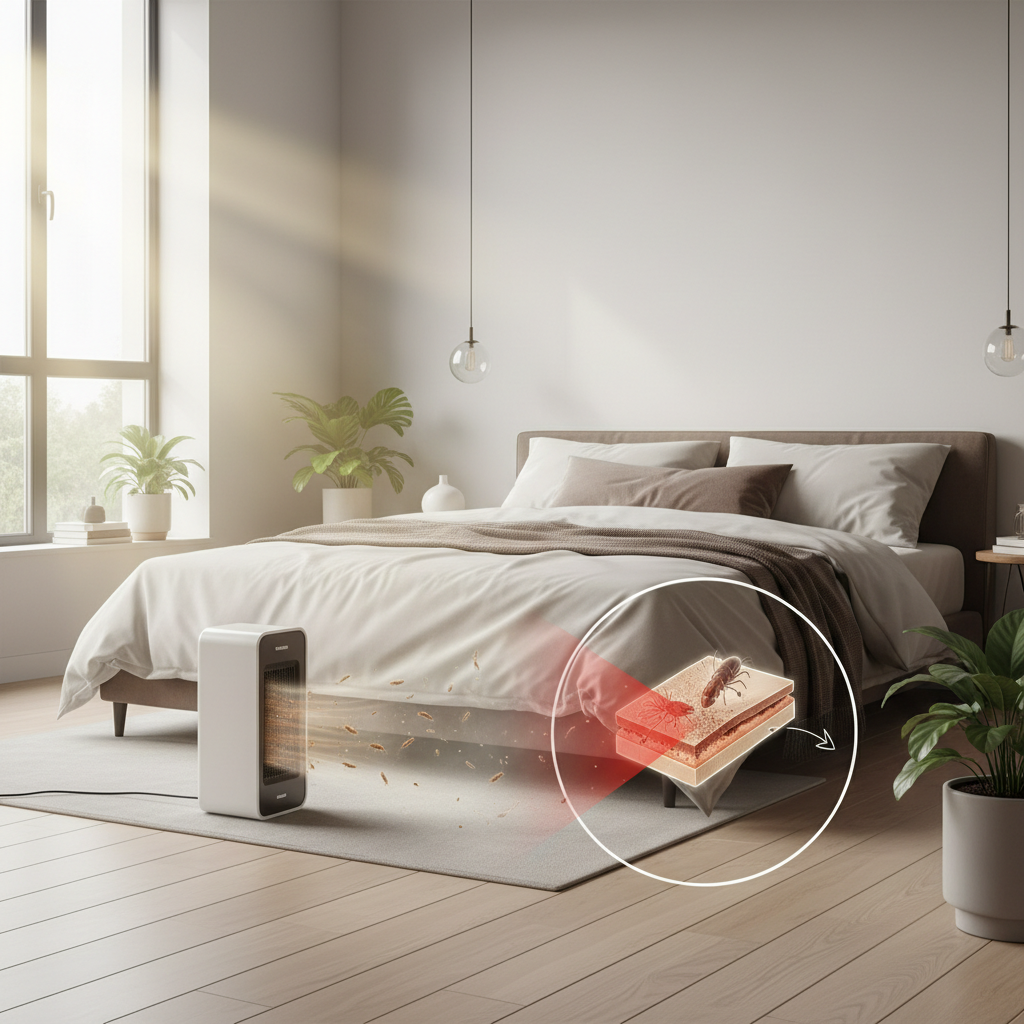
Dust mites are one of the most common household allergens, thriving in bedding, carpets, upholstered furniture, and anywhere warm and humid. For allergy sufferers, finding effective ways to eliminate them is a top priority. One question that comes up frequently is whether a heater can kill dust mites.
Understanding how heat affects dust mites can help you make smarter decisions about managing allergens at home, especially during colder months when heating systems run constantly.
Quick Answer
Yes, heat can kill dust mites, but the temperature must be high enough and sustained long enough to be effective. Dust mites die when exposed to temperatures above 130°F (54°C) for at least 30 minutes. Standard home heating systems do not typically reach these temperatures in living spaces, so targeted heat application is required.
Key Takeaways
- Dust mites die at temperatures above 130°F (54°C) when exposure lasts at least 30 minutes
- Typical home thermostats set between 68°F and 76°F will not kill dust mites
- High-heat washing and drying of bedding is one of the most effective heat-based methods
- Steam cleaners can deliver lethal heat directly to carpets, mattresses, and upholstery
- Low humidity (below 50%) weakens dust mite populations even when heat alone is insufficient
- Heaters can indirectly help by reducing indoor humidity, which limits dust mite survival
What Temperature Kills Dust Mites?
Dust mites die at 130°F (54°C) or higher, provided that temperature is maintained for a minimum of 30 minutes. At lower temperatures, mites may become less active but will not be eliminated.
This is an important distinction. Many people assume that running their home heater during winter reduces dust mites, but a thermostat set to 72°F creates no and direct, not ambient room temperature.
Can a Space Heater or Home Heating System Kill Dust Mites?
Standard home heating systems and space heaters raise the overall air temperature in a room, but they do not bring surfaces like mattresses, pillows, or carpet fibers up to the 130°F threshold needed to kill dust mites.
A forced-air furnace, baseboard heater, or oil-filled radiator heater will warm your living space comfortably, but the ambient air temperature never gets close to lethal levels for mites. The mites live deep within fabric fibers and bedding materials, insulated from the surrounding air.
The short answer: Home heating systems alone are not an effective method for killing dust mites.
What Heat Sources Actually Work Against Dust Mites?
There are specific heat-based methods that can reach the temperatures required to eliminate dust mites effectively.
Washing and Drying Bedding
Washing bedding in hot water at 130°F or above, then drying on a high-heat dryer setting, is one of the most reliable methods. Most residential washing machines allow you to select hot water cycles, and a standard dryer on high heat can reach internal temperatures well above the lethal threshold.
- Wash sheets, pillowcases, and duvet covers weekly
- Use the hottest water setting available on your machine
- Dry on the highest heat setting for at least 30 minutes
Steam Cleaners
A steam cleaner is one of the most practical tools for killing dust mites in surfaces that cannot be machine-washed. Steam cleaners produce vapor at temperatures between 200°F and 300°F, far exceeding what is needed.
They can be used effectively on:
- Mattresses
- Carpets and rugs
- Upholstered furniture and sofas
- Curtains and drapes
The key is moving slowly enough to allow the heat to penetrate the fabric fibers rather than just passing over the surface.
Clothes Dryers for Stuffed Animals and Pillows
Items that cannot be washed easily, such as stuffed animals or decorative pillows, can be placed in a dryer on high heat for 30 minutes to kill dust mites without washing.
Does Heating Reduce Humidity and Indirectly Kill Dust Mites?
This is where home heaters do offer a genuine benefit. Dust mites depend on humidity to survive. They absorb moisture from the air and cannot survive when relative humidity drops below 40 to 50 percent.
Running a heater during winter months naturally lowers indoor humidity by warming and drying the air. This creates a less hospitable environment for dust mites, even if the heat itself never reaches lethal temperatures for them.
If you are already curious about how heating affects indoor air quality and comfort, understanding why heaters can cause headaches is worth exploring, since dry heated air affects more than just dust mites.
This indirect effect is real and meaningful. Consistently low indoor humidity will reduce dust mite populations over time by limiting their ability to reproduce and thrive.
Comparison: Heat Methods for Dust Mite Control
| Method | Temperature Reached | Effective Against Mites? | Best Used On |
|---|---|---|---|
| Home thermostat (72°F) | 72°F ambient | No | N/A |
| Hot water wash | 130°F+ | Yes | Bedding, linens |
| Clothes dryer (high heat) | 130°F+ | Yes | Bedding, stuffed animals |
| Steam cleaner | 200°F to 300°F | Yes | Mattresses, carpets, furniture |
| Space heater or furnace | 68°F to 80°F ambient | No | N/A |
Common Misconceptions About Heaters and Dust Mites
Misconception 1: Running the heat all winter eliminates dust mites.
False. Ambient room temperatures from heating systems are nowhere near the threshold needed to kill mites. Populations can remain active all year indoors.
Misconception 2: Cold temperatures are better for killing mites.
Partially true but not practical. Dust mites do die at freezing temperatures, but exposing a mattress to freezing conditions for several days is not a realistic household solution for most people.
Misconception 3: Any heat source works.
Not accurate. The heat must directly penetrate the material where mites live. Surface-level warmth from a nearby heater does not reach deep enough into bedding or carpet fibers.
Conclusion
A heater on its own will not kill dust mites in your home. The temperatures required, above 130°F sustained for at least 30 minutes, are far beyond what any standard heating system delivers to room air. However, targeted heat methods like hot water laundry cycles, clothes dryers, and steam cleaners are genuinely effective tools for eliminating dust mites from bedding and soft surfaces.
Heaters do provide indirect benefits by lowering indoor humidity, which weakens dust mite populations over time. Combining regular high-heat washing with humidity control gives you the most practical and effective approach to reducing dust mites in your home.
FAQs
Can a hair dryer kill dust mites?
A hair dryer can reach high enough temperatures, but it is difficult to sustain the required 130°F for 30 minutes across a large surface like a mattress. Steam cleaners are a more practical and effective alternative for this purpose.
Do dust mites die in the dryer without washing?
Yes. Placing items in a dryer on high heat for at least 30 minutes can kill dust mites even without washing. This is useful for items that are difficult to launder, such as stuffed animals or decorative pillows.
What humidity level kills dust mites?
Dust mites struggle to survive when relative indoor humidity drops below 40 to 50 percent. Maintaining humidity in this range consistently will reduce dust mite populations over time, even without direct heat treatment.
Can dust mites survive in a heated home during winter?
Yes. Dust mites can survive and reproduce in a heated home as long as there is enough humidity and access to food sources like shed skin cells. Standard indoor heating temperatures do not pose a threat to them.
How often should bedding be washed to control dust mites?
Washing bedding in hot water at 130°F or higher once a week is the recommended frequency for effective dust mite control. Regular washing prevents populations from rebuilding between treatments.