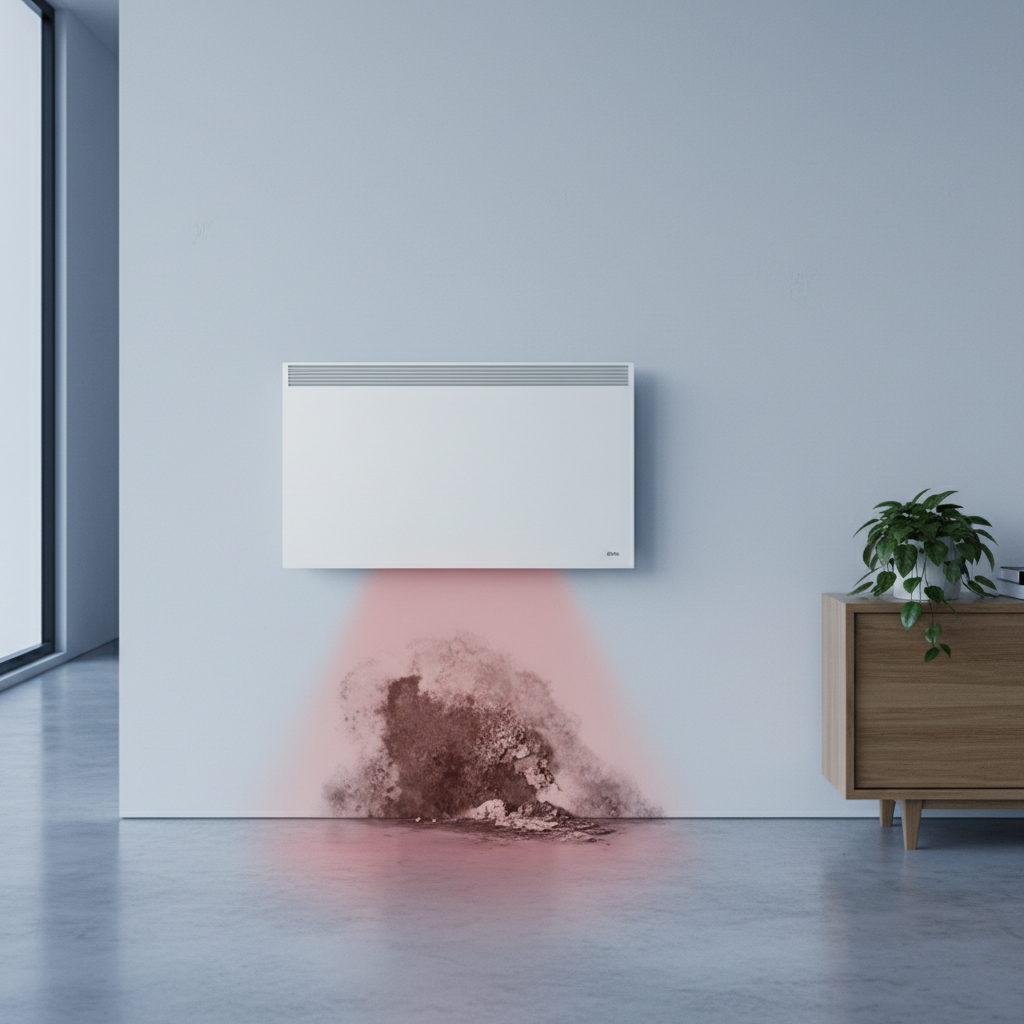
Mold is a persistent household problem, and many homeowners wonder whether heat alone can eliminate it. With space heaters, central heating systems, and industrial heat treatments all available, it is a fair question to ask whether cranking up the temperature is enough to get rid of a mold problem for good.
This article breaks down what the research and practical experience actually show, so you can make informed decisions about mold removal in your home.
Quick Answer
A heater can kill mold, but only under specific conditions. Mold generally dies when exposed to temperatures above 140°F (60°C) for a sustained period. Standard home heating systems do not reach these temperatures in open air, making them insufficient for true mold eradication. Professional heat remediation equipment is typically required for reliable results.
Key Takeaways
- Most mold species die at temperatures above 140°F, but typical home heaters do not reach this level in ambient air
- Heat can kill surface mold, but it does not remove mold spores or the underlying moisture problem
- Mold spores can survive in a dormant state and reactivate when conditions become favorable again
- Humidity control is more effective for long-term mold prevention than heat alone
- Professional heat remediation uses specialized equipment to raise room temperatures high enough to be effective
- Addressing the moisture source is always the most critical step in any mold treatment plan
How Hot Does It Need to Get to Kill Mold?
Mold dies at sustained temperatures of 140°F to 160°F (60°C to 71°C). Most household mold species cannot survive prolonged exposure at these levels. However, reaching and maintaining these temperatures throughout an entire room or wall cavity is extremely difficult with standard heating equipment.
Some mold species are more heat-resistant than others. Certain thermophilic molds can survive at temperatures up to 131°F (55°C) and may require even higher heat exposure to be fully eliminated.
What About Lower Temperatures?
At temperatures between 100°F and 130°F, mold growth slows significantly but does not stop completely. The mold may become dormant rather than dead, meaning it can resume growing once temperatures drop and moisture returns.
This distinction matters. Slowing mold growth is not the same as killing it.
Can a Standard Home Heater Kill Mold?
No, a standard home heater cannot reliably kill mold. Central heating systems and portable space heaters raise the ambient air temperature in a room, but they do not concentrate enough heat directly on mold colonies or inside wall cavities to reach the temperatures needed for eradication.
There are a few important reasons why home heaters fall short:
- Uneven heat distribution means mold inside walls, under floors, or in corners may not be reached
- Air temperature vs. surface temperature are different; the surface where mold grows may remain much cooler than the air
- Cycle times for standard HVAC systems are not long enough to maintain lethal temperatures
If you are dealing with a visible mold problem, running your heater at maximum settings will not solve it.
Does Heat Help Prevent Mold?
Heat can indirectly help prevent mold by reducing relative humidity. Warmer air holds more moisture, which can lower the relative humidity in a space and make conditions less favorable for mold growth. This is one reason why using a heater can dehumidify a room to some extent.
However, this effect is limited. If there is a water leak, poor ventilation, or condensation buildup, heat alone will not prevent mold from forming. Addressing the root moisture source is always the priority.
Professional Heat Remediation: When It Actually Works
Professional mold heat remediation is a legitimate treatment method. Specialized equipment raises the temperature of an entire room or structure to between 130°F and 150°F and holds it there for several hours. This approach can penetrate walls and other surfaces more effectively than surface treatments.
Key differences from standard home heating:
| Factor | Home Heater | Professional Heat Treatment |
|---|---|---|
| Maximum temperature | 70°F to 90°F (ambient) | 130°F to 150°F+ |
| Heat penetration | Surface level only | Penetrates walls and cavities |
| Duration | Continuous cycling | Sustained for hours |
| Mold kill rate | Low to none | High when done correctly |
Even with professional heat treatment, mold spores that have settled on surfaces can survive and regrow if moisture is reintroduced. This is why remediation must always be paired with moisture control.
Common Misconceptions About Heat and Mold
Misconception: Turning the heat up high will dry out and kill mold.
Reality: Heat dries the air, not necessarily the surface or material where mold is growing. Mold embedded in drywall or wood requires much more than warm air to be eliminated.
Misconception: If mold looks dead, it is dead.
Reality: Dormant mold can appear dry and inactive but will resume growing when moisture returns. Visible mold should always be physically removed and the area treated appropriately.
Misconception: Any heater can double as a mold treatment tool.
Reality: Propane heaters and other portable options generate heat but cannot replicate the controlled, sustained temperatures needed for effective mold remediation.
Conclusion
Heat can kill mold under the right conditions, but standard home heating equipment is not capable of delivering those conditions reliably. Effective mold treatment requires temperatures well above what most heaters produce, sustained exposure, and most importantly, elimination of the moisture source that allowed mold to grow in the first place.
If you suspect a significant mold problem, professional assessment and remediation is the safest and most effective path forward.
FAQs
Can a space heater kill mold in a room?
A standard space heater cannot kill mold. It raises air temperature but does not reach or sustain the 140°F or higher temperatures required to eradicate mold colonies, especially those growing inside walls or on porous surfaces.
Does heat kill mold spores?
Heat can kill active mold at high enough temperatures, but spores are more resilient. Even after heat treatment, surviving spores can reactivate if moisture is reintroduced, which is why moisture control is essential.
What temperature kills black mold?
Black mold, like most mold species, is killed at sustained temperatures above 140°F to 160°F. These temperatures must be maintained for several hours and must reach the actual surface where the mold is growing.
Is it better to use heat or cold to kill mold?
Neither extreme temperature is a reliable DIY solution. Heat at professional levels can be effective, but cold temperatures only make mold dormant rather than killing it. Moisture removal remains the most effective long-term strategy.
Can running the heat prevent mold from growing?
Running heat can reduce relative humidity, which makes conditions less favorable for mold. However, it will not prevent mold if there is an active moisture source such as a leak, condensation, or flooding.