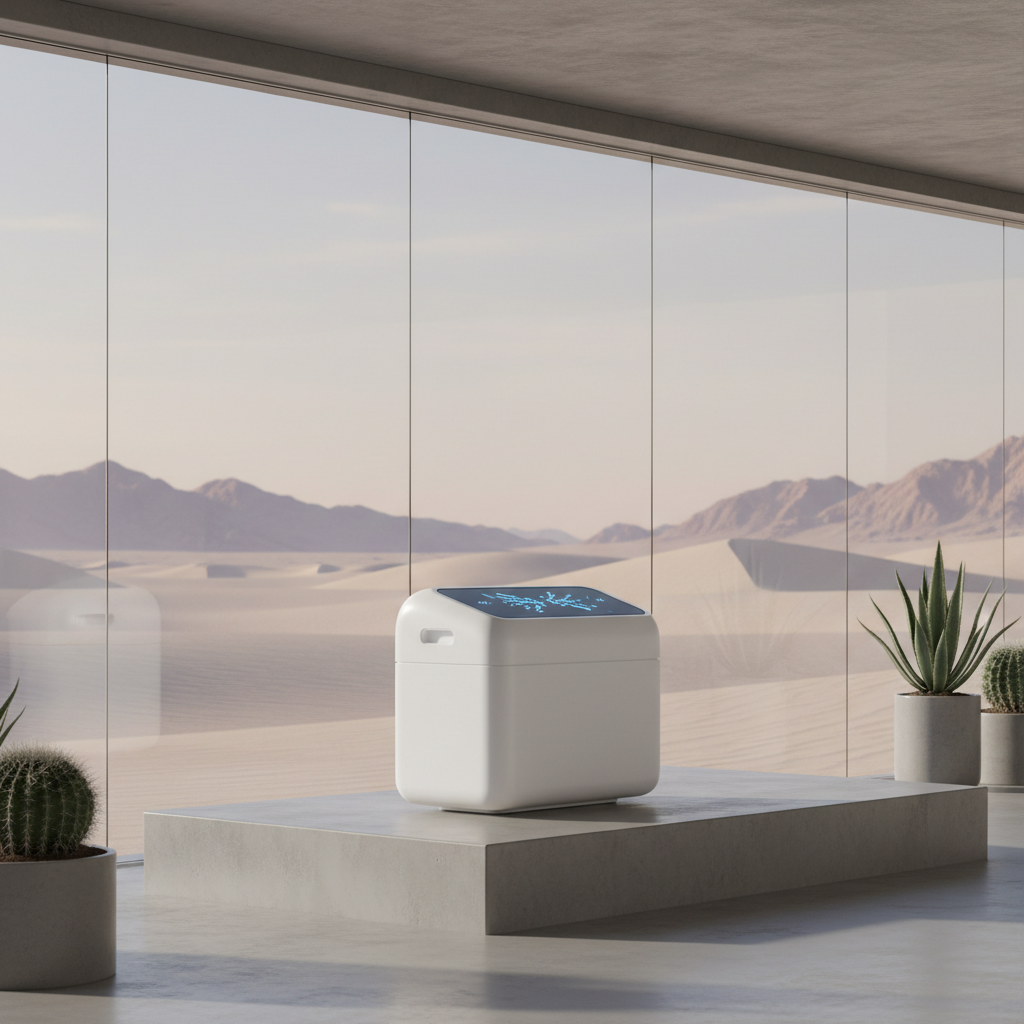
If you’ve been searching for a cooling solution that doesn’t require window installation or permanent ductwork, you’ve probably come across the term “ventless air conditioner.” These units promise portability and convenience, but there’s a lot of confusion about what they actually do and whether they can genuinely cool a room.
Before diving in, it’s worth knowing that cooling needs vary widely by space. If you’re also trying to figure out which air conditioner is good for a small room, that guide covers a range of unit types worth comparing alongside ventless options.
This article breaks down exactly how ventless air conditioners work, what their real limitations are, and who they make sense for.
Quick Answer
Ventless air conditioners work moderately well in specific conditions, but they do not cool air the same way traditional AC units do. They use evaporative cooling to lower the temperature by 5 to 15 degrees Fahrenheit. They work best in dry climates with low humidity and are not effective replacements for conventional air conditioning in most U.S. homes.
Key Takeaways
- Ventless air conditioners use evaporative cooling, not refrigerant-based compression
- They work best in dry climates where humidity is below 60%
- Cooling output is typically 5 to 15 degrees Fahrenheit below ambient temperature
- They add moisture to the air, which can make humid rooms feel worse
- They are more energy-efficient than traditional AC but significantly less powerful
- They are best suited for spot cooling, garages, workshops, or dry-climate regions
What Is a Ventless Air Conditioner?
A ventless air conditioner is a portable cooling device that cools air without exhausting hot air outside through a vent or window. Most models on the market are actually evaporative coolers, sometimes called swamp coolers. They pull warm air through a water-saturated pad, which causes the water to evaporate and lower the air temperature before blowing it into the room.
This is fundamentally different from how a standard window AC or central air system works. Traditional systems use refrigerant to absorb heat and expel it outside. Ventless units have no such exhaust mechanism, which is both their main advantage and their biggest limitation.
How Well Do Ventless Air Conditioners Cool a Room?
The honest answer is: it depends heavily on your climate and environment.
In dry regions like the Southwest U.S., where humidity levels regularly drop below 30 to 40%, evaporative coolers can be genuinely effective. The lower the humidity, the more cooling power evaporation produces. In these conditions, a ventless unit can make a room feel noticeably cooler and more comfortable.
In humid climates like the Southeast or Midwest, performance drops significantly. When the air is already saturated with moisture, evaporation slows down and the cooling effect becomes minimal. Worse, the unit adds even more humidity to the room, which can make the space feel muggy and uncomfortable.
Key performance factors:
- Outdoor and indoor humidity levels
- Room size relative to unit capacity
- Airflow and ventilation in the space
- How frequently the water reservoir is refilled
Ventless vs. Vented Portable Air Conditioners
It’s important not to confuse ventless evaporative coolers with vented portable air conditioners. Vented portable ACs use a refrigerant cycle and require an exhaust hose routed through a window or wall. They cool more effectively but need a venting point.
| Feature | Ventless (Evaporative) | Vented Portable AC |
|---|---|---|
| Requires window/vent | No | Yes |
| Cooling method | Evaporation | Refrigerant compression |
| Effective in humidity | No | Yes |
| Adds moisture to air | Yes | No |
| Energy use | Low | Moderate to high |
| Cooling power | Low to moderate | Moderate to high |
If you want a deeper look at how traditional portable and window units compare, the guide on ventless air conditioners covers the full breakdown of types and use cases. If you’re specifically considering a window-mounted option, the article on choosing the best vertical window air conditioner is a helpful resource for comparing top-rated models.
Do Ventless Air Conditioners Use a Lot of Electricity?
No. Ventless evaporative coolers are among the most energy-efficient cooling options available. Most models use between 50 and 200 watts, compared to a window AC that typically draws 500 to 1,500 watts. If electricity costs are a concern, this is a meaningful difference.
For a broader look at how much electricity different cooling systems consume, the article on how much electricity an air conditioner uses provides detailed comparisons across unit types. If you’re weighing the long-term cost of running a traditional system versus a ventless unit, it also helps to understand how much central air costs to run per month as a baseline for comparison.
Who Should Use a Ventless Air Conditioner?
Ventless coolers are a practical choice in specific situations, but they are not a universal solution.
Good candidates:
- Homeowners in dry, low-humidity climates (Southwest U.S.)
- People cooling small, well-ventilated spaces like garages or workshops
- Renters who cannot install window units
- Anyone needing a low-cost, portable spot cooling solution
Poor candidates:
- People living in humid climates (Southeast, Gulf Coast, Midwest)
- Anyone trying to cool a sealed, poorly ventilated room
- Those expecting performance comparable to central air or a window AC
Common Misconceptions About Ventless Air Conditioners
Misconception 1: They work like real air conditioners.
Evaporative coolers do not remove heat from a room the way refrigerant-based systems do. They lower the perceived temperature through moisture, not by expelling heat outside.
Misconception 2: They work in any climate.
Humidity is the single biggest factor in their effectiveness. In humid conditions, they provide little to no meaningful cooling.
Misconception 3: No ventilation is needed.
While they don’t require an exhaust hose, ventless coolers actually work better with some airflow. Cracking a window or door allows the added moisture to escape and improves overall cooling performance.
Conclusion
Ventless air conditioners can work well, but only under the right conditions. In dry climates with low humidity, they offer a portable, energy-efficient way to bring down room temperature without installation. In humid regions, their effectiveness drops considerably and they may make your space feel less comfortable.
Understanding what these units actually do, versus what traditional AC systems do, is the key to deciding whether one fits your needs.
FAQs
Can a ventless air conditioner cool an entire room?
A ventless evaporative cooler can lower the temperature in a small to medium room by 5 to 15 degrees Fahrenheit, but it works best as a spot cooler rather than a whole-room solution, especially in humid climates.
Do ventless air conditioners work in high humidity?
No. Ventless evaporative coolers lose most of their effectiveness when indoor or outdoor humidity exceeds 60%. The cooling process relies on evaporation, which slows dramatically in moist air.
Are ventless air conditioners worth buying?
They are worth buying if you live in a dry climate, need a portable option, or want low-energy spot cooling. They are not a good investment if you expect performance similar to a traditional window or central air unit.
Do ventless air conditioners require maintenance?
Yes. They require regular water refills, cleaning of the water reservoir to prevent mold or mineral buildup, and periodic replacement of the evaporative cooling pads.
Can you use a ventless air conditioner in a bedroom?
Yes, but with caveats. In a dry climate, it can make a bedroom more comfortable.